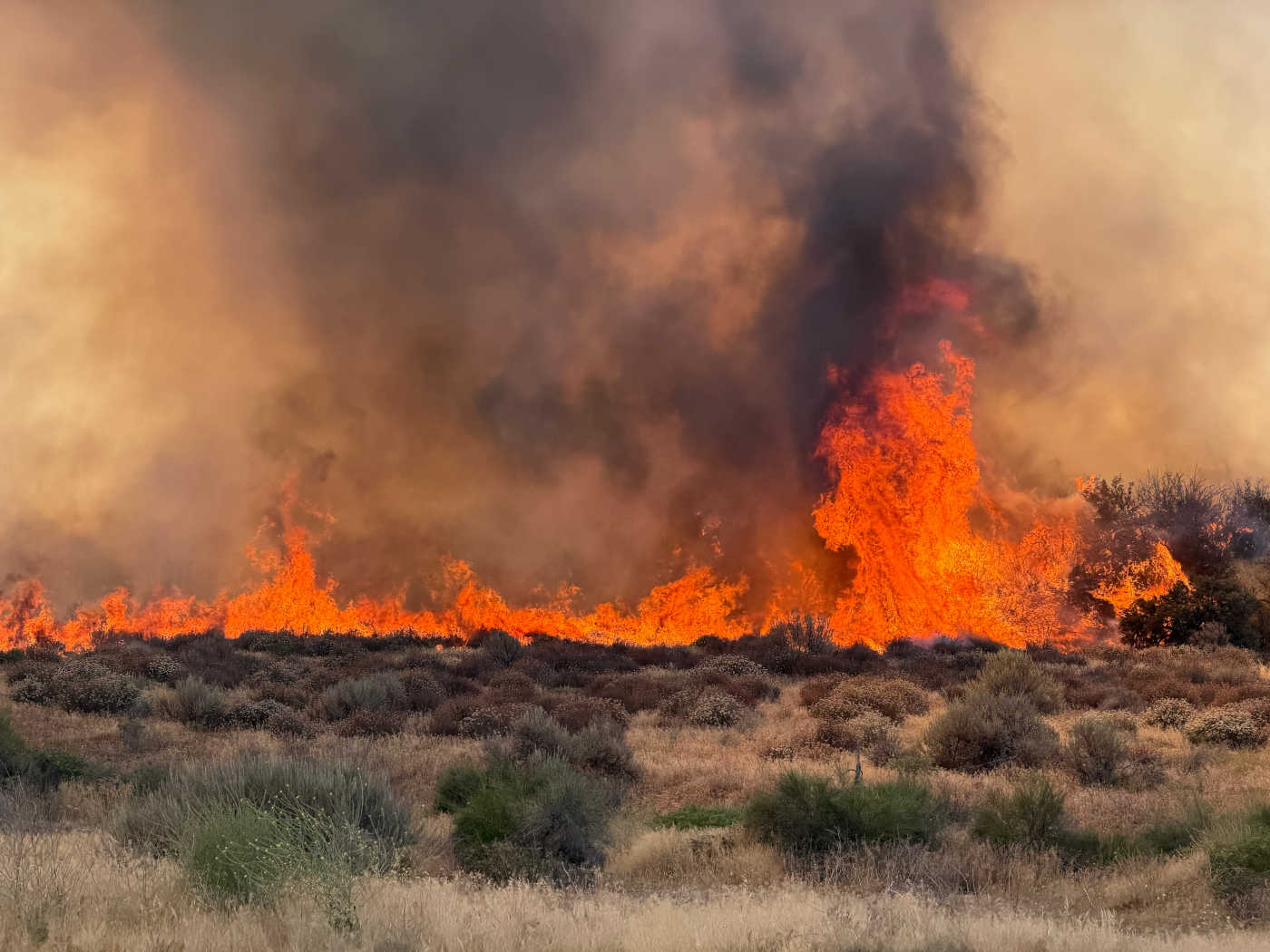
It may be quieter in December, but on hot, windy days in late summer, the quiet at Hemet-Ryan Airport can vanish in seconds. A radio crackles, pilots sprint for the flight line, and within minutes red-and-white aircraft are lifting off over west Hemet, banking toward smoke columns over the Inland Empire, San Jacinto Mountains, or foothills above North San Diego County.
For nearly seven decades, Hemet-Ryan Air Attack Base has been one of California’s most important hubs for fighting wildfires from the air, launching tankers and helicopters that protect more than 17,000 square miles of public and private land across Southern California.
The roots of the base go back to the 1950s, when what is now Hemet-Ryan Air Attack Base was part of the Ryan School of Aeronautics. This World War II training site helped prepare thousands of military pilots, including future test pilot Chuck Yeager.



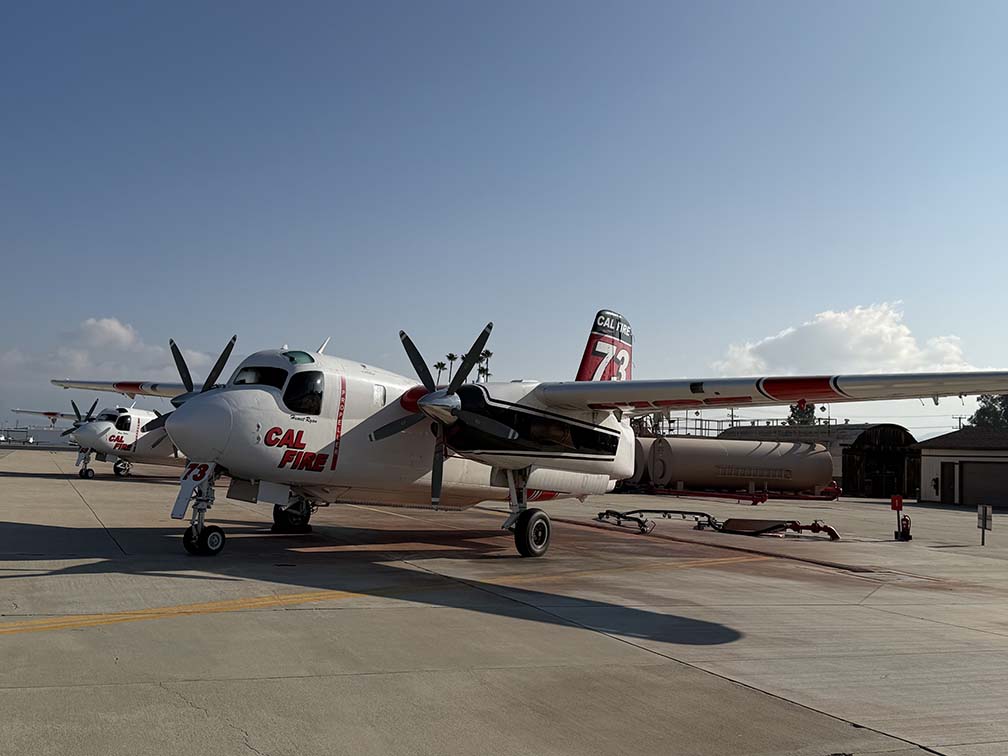
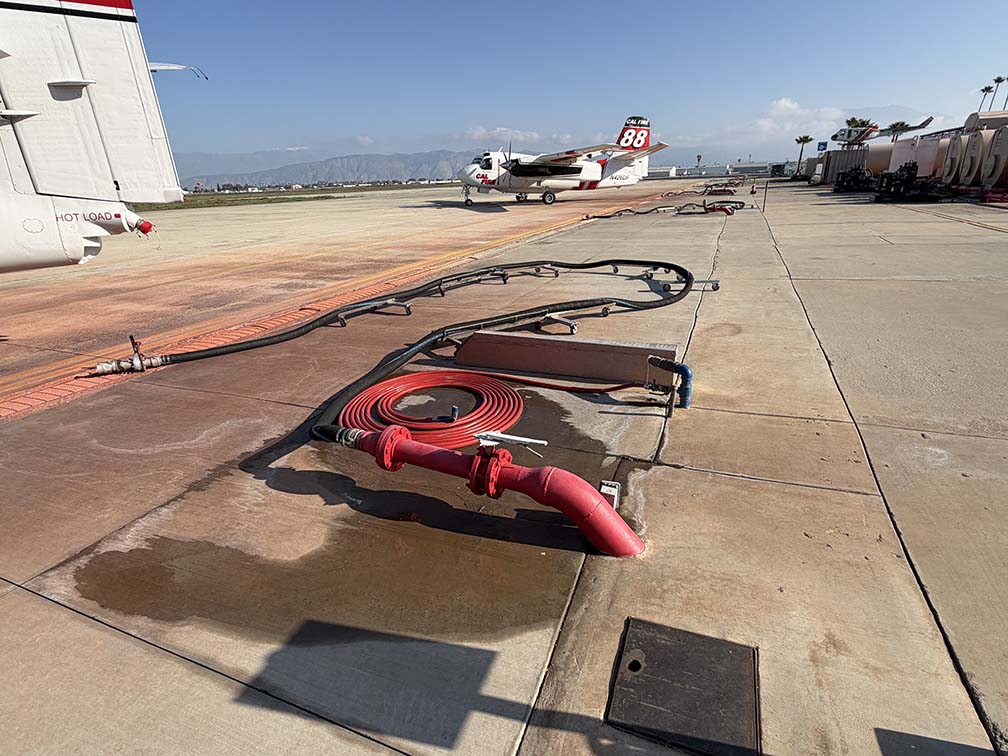
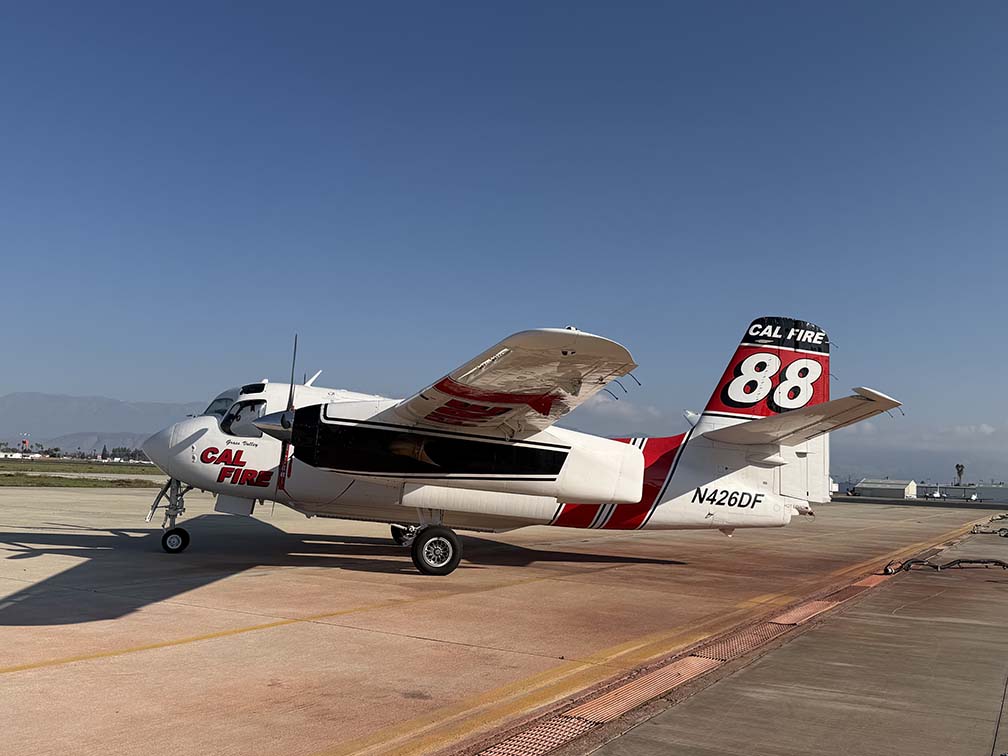
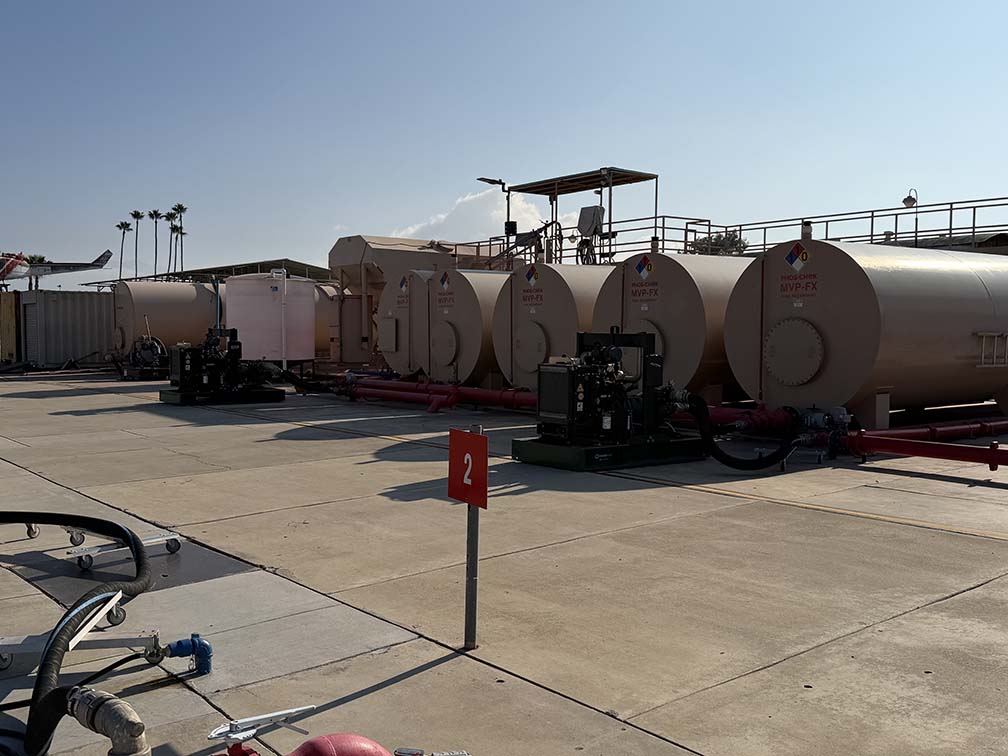
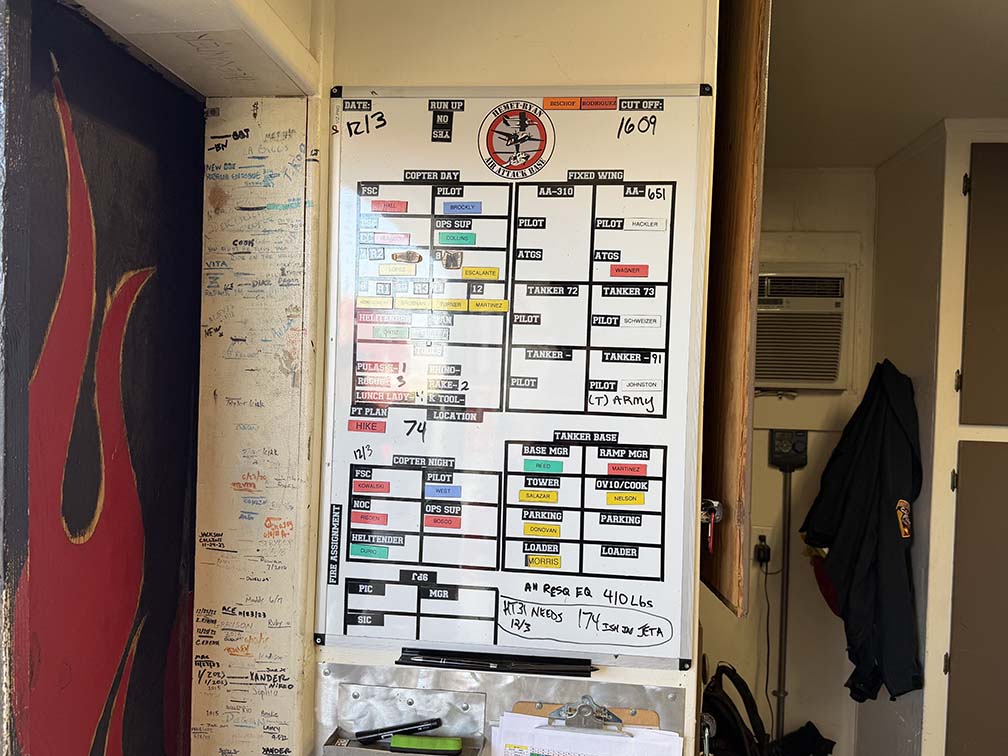
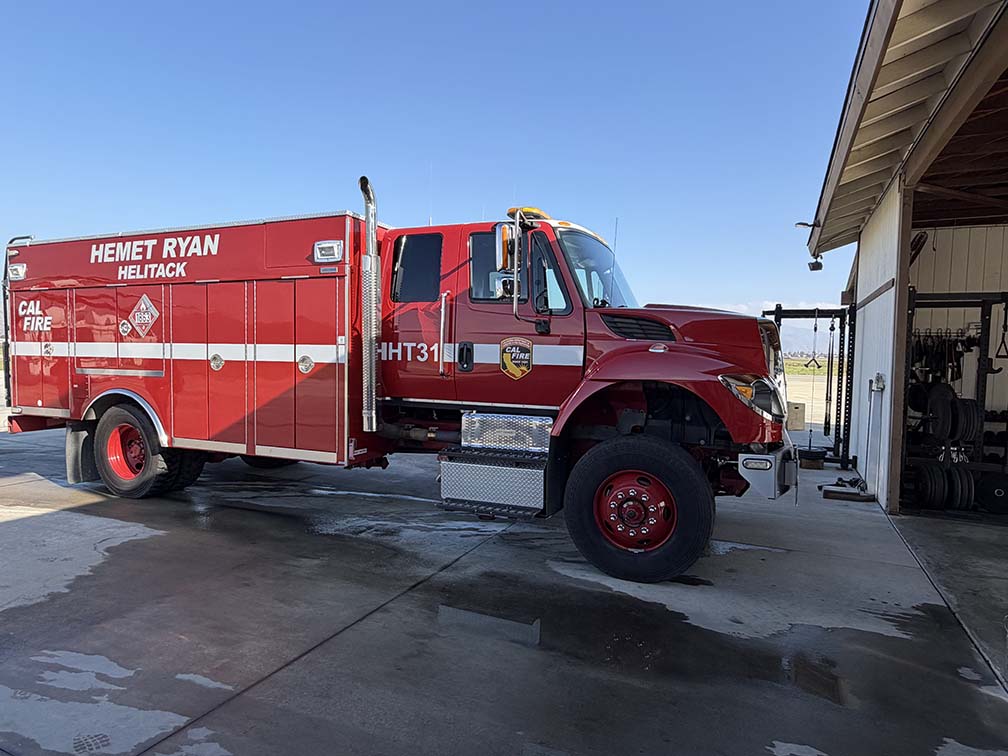
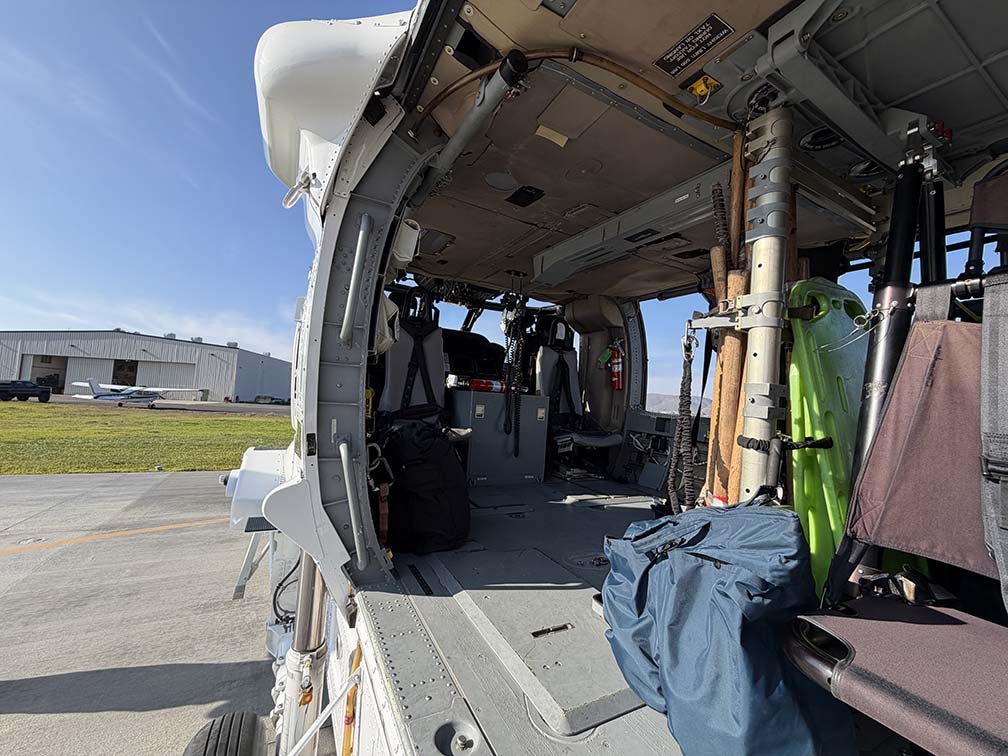
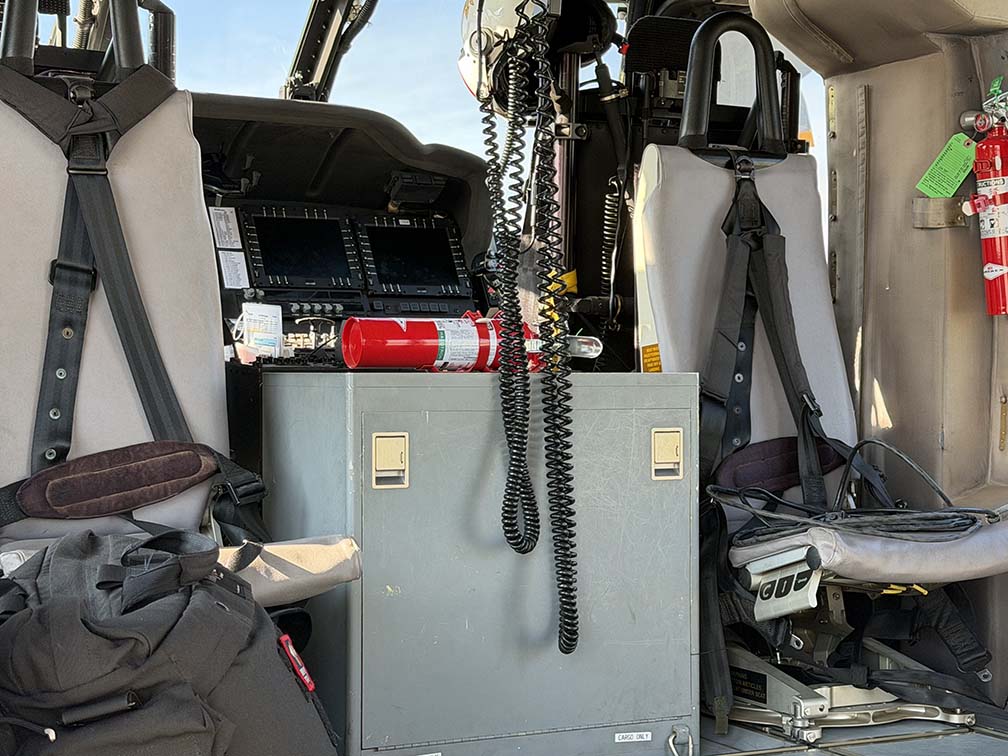
CAL FIRE began using the field as an air attack base in 1957, making Hemet-Ryan one of the earliest permanent air-tanker bases in the state. In those early years, state and federal agencies relied on privately owned, World War II–era aircraft converted for firefighting duty. “As those airframes aged and parts grew scarce, CAL FIRE acquired surplus U.S. Navy Grumman S-2A submarine-hunting planes and converted them into retardant tankers using a design developed by Hemet Valley Flying Service in Hemet. The first two converted S-2 aircraft were tested right here at Hemet-Ryan, and that basic design has been in continuous service since 1975,” said Hemet-Ryan Air Attack Base CAL FIRE Capt. Brian Wagner.
In speaking about the S-2s, which started life as Navy submarine hunters in the mid-1960s, Capt. Joseph Donovan said. “CAL FIRE leases them from the federal government for a dollar a year. We’ve converted them to carry about a thousand gallons of retardant, and the pilots put that load down with incredible precision.”
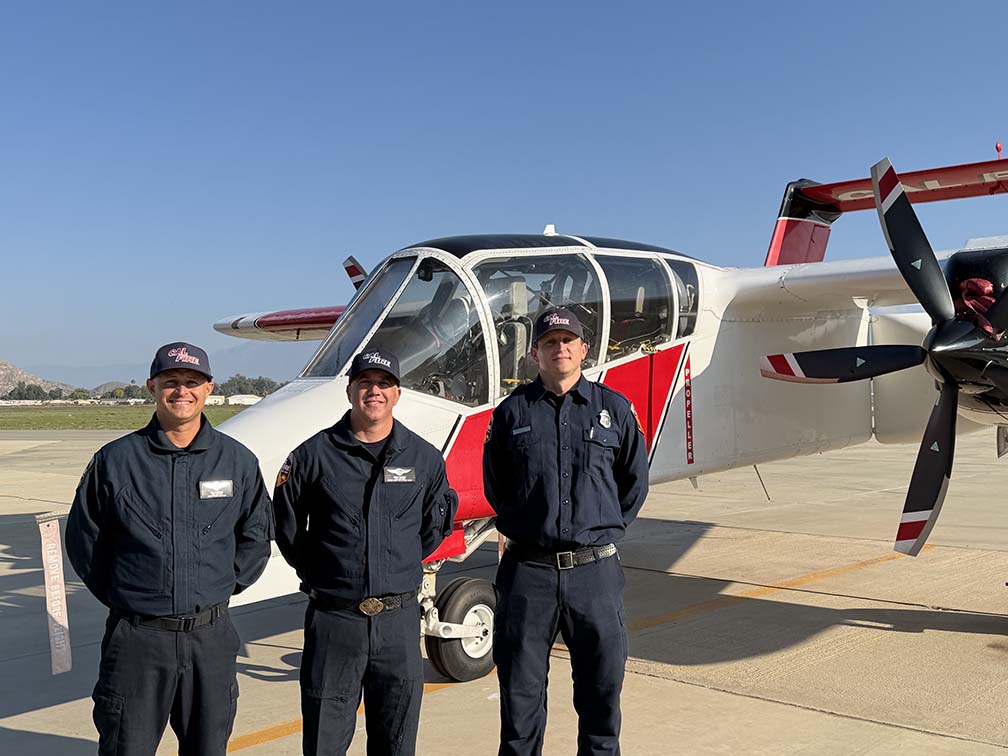
In 1977, Hemet-Ryan expanded again when CAL FIRE launched a pilot “helitack” program with a contracted helicopter and a small crew. The test was so successful that it became a full-time helitack base with a permanent helicopter and dedicated firefighting crew based at the airfield. By the early 1990s, the base received upgraded Bell UH-1H “Super Huey” helicopters and a more capable OV-10 Bronco to serve as the air-attack and coordination platform over large fires.
For decades, Hemet-Ryan was statistically the busiest air tanker base in the United States, at one point delivering an average of 1.5 million gallons of retardant each year onto wildfires across the region.
“There are only three bases in California where a CAL FIRE helitack program and a fixed-wing air attack base share the same ramp. Hemet-Ryan was the first,” Capt. Wagner explained. “Most places, there’s a line in the sand—helicopter guys on one side, tankers on the other. Here, it’s all one team.”
“Our firefighters are interchangeable,” Capt. Wagner said. “On a three-day shift they might spend one or two days on the air base and one or two days on the helicopter. Everybody learns both jobs. At a lot of other bases, there’s a hard line—helicopter folks don’t go to the fixed-wing side and vice versa.”
“Once dispatch gives the voice-out, the clock starts,” Capt. Wagner said. “In the OV-10, we can be taxiing in about three minutes and airborne a couple of minutes after that. The Black Hawk is usually off the ground in around ten. For the S-2s, we shoot for about a five-minute turnaround—land, reload with retardant, and back in the air. During fire season, they sit full, so they’re ready to go.”
“Once we confirm the fire’s coordinates, we establish a Fire Traffic Area—a five-mile ring where every firefighting aircraft is under our control,” Capt. Wagner said. Helicopters work from the surface up to about five hundred feet. Then we are managing the whole picture from the back seat of the OV-10 at 1000 feet above the ground. Above us are tankers at another thousand feet. We’re managing the whole picture. Any aircraft coming within twelve miles has to call us, and if we haven’t talked by seven miles, they’re not allowed to enter. We’re usually listening to ten or more frequencies at once. Everything is coordinated verbally—no pointing—so you have to be very clear and very calm.”
What flies out of Hemet-Ryan today
Today, Hemet-Ryan is one of roughly 20 CAL FIRE air attack bases strategically placed around the state. From its location on Hemet’s western edge, the base covers a vast initial-attack zone that stretches across Riverside County and into San Diego, San Bernardino, and, when needed, neighboring counties.
A typical lineup at the base, according to Fire Capt. Donovan, includes:
- Two S-2T air tankers, each capable of carrying about 1000 to 1,200 gallons of fire retardant for rapid initial attack on new starts.
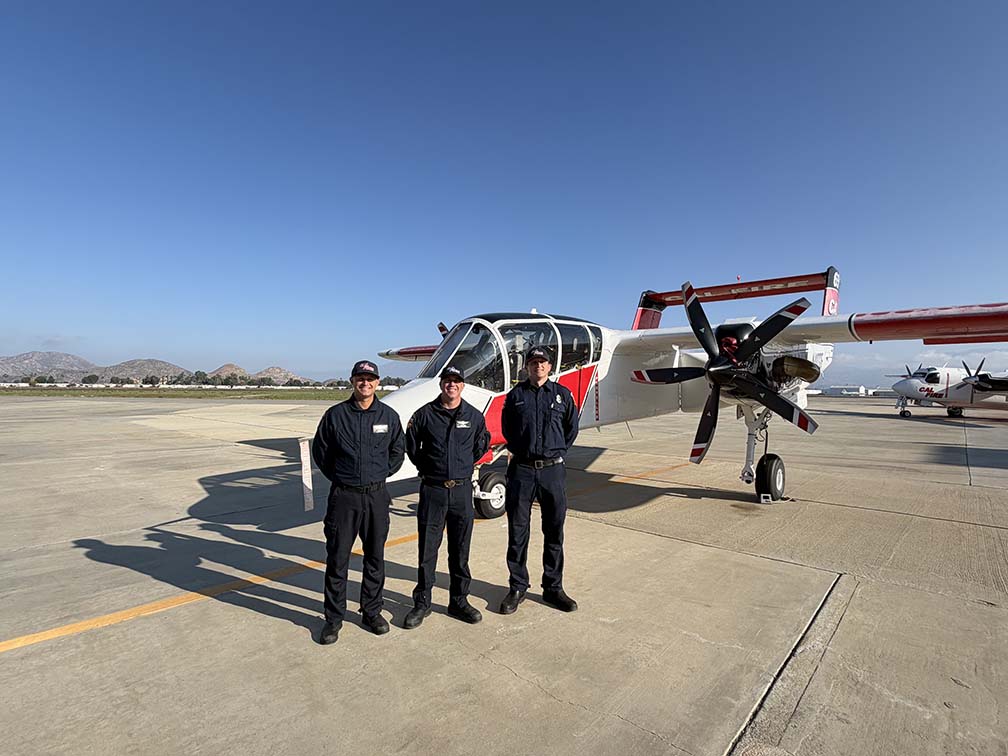
- An OV-10A Bronco used as the “air attack” ship, orbiting above fires to direct tankers, helicopters, and ground crews.
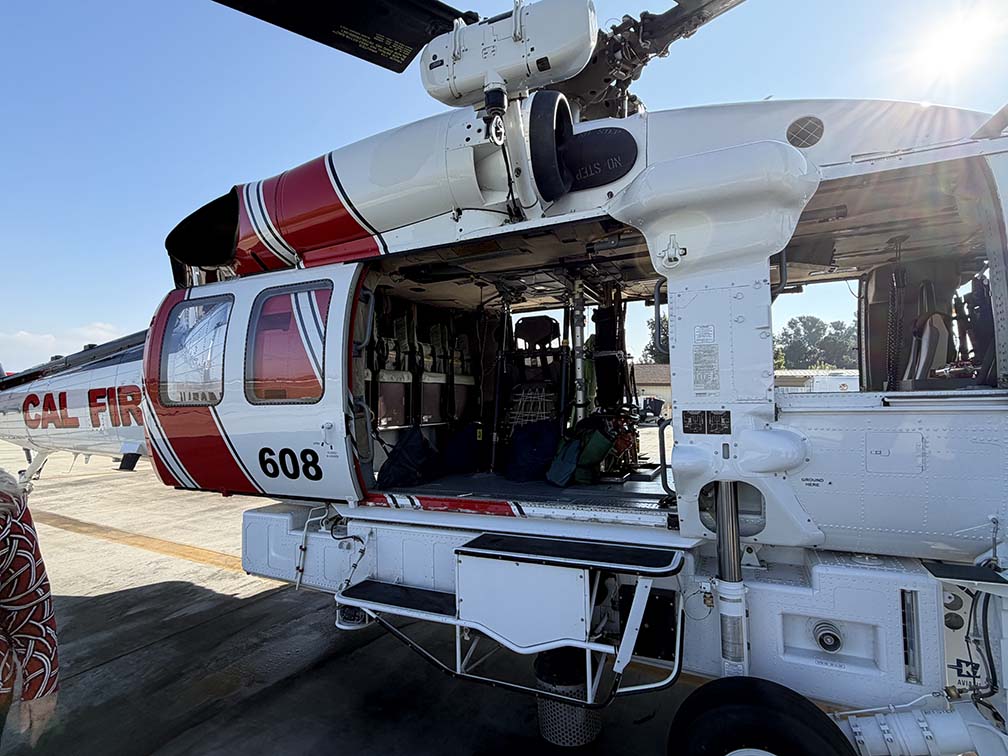
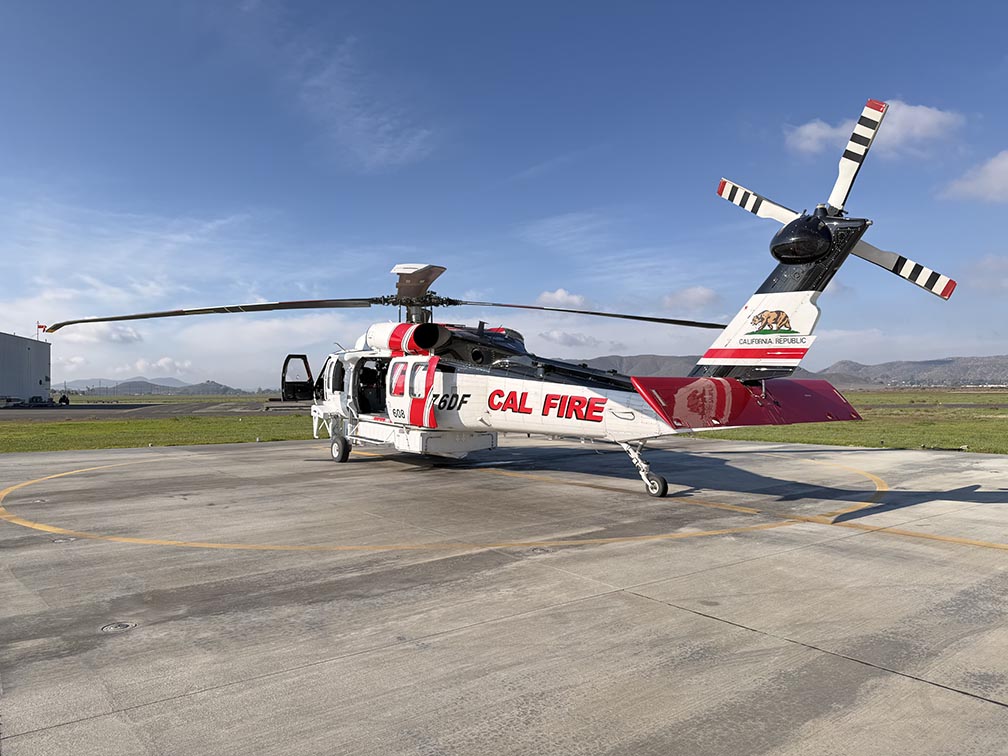
- A CAL FIRE Sikorsky S-70i Black Hawk, which was purchased brand new by the State, which can be used for fire or rescue.
During peak fire season, the base also hosts contract aircraft. In 2023, for example, Riverside County funded an “exclusive use” Sikorsky S-64 Skycrane—call sign “Three-Seven-Sierra”—that can drop more than 2,000 gallons of water in a single pass and quickly refill from lakes, rivers, or portable tanks using a belly-mounted snorkel.
Beyond CAL FIRE, Hemet-Ryan is also home to a Riverside County Sheriff’s aviation unit, Mercy Air medical helicopters, and a Civil Air Patrol squadron, making the field a year-round aviation hub for emergencies of all kinds.
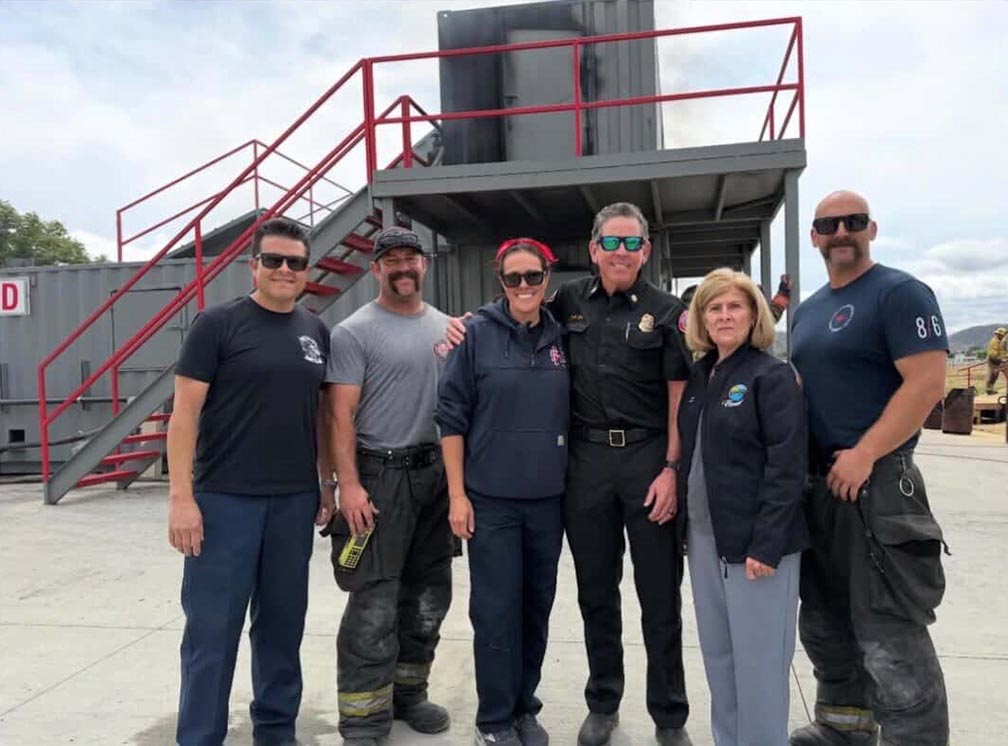
CAL FIRE and Hemet Ryan Air Attack Base invests heavily in training to keep the team ready.
According to Fire Captain Martinez, “Captains don’t have to be pilots, but they must be ‘front seat qualified’ and complete the ‘Hellac Captain’s Academy’, a 7-day training course. They also need to complete a 2-week course to operate the air rescue hoist.”
“Captains are trained, however, to fly the aircraft and land it safely in case something happens to the pilot, even though they are not pilots themselves,” said Capt. Martinez.
”Captains have to maintain currency through regular training, including flying at night with night vision goggles.” Martinez also said that the use of lasers is essential for night water drops, allowing the captain to precisely direct the drops.
The department has invested heavily in infrastructure like water tanks to support air rescue operations.
Black Hawks bring new power and rescue capability to Hemet-Ryan
Capt. Donovan said his favorite aircraft at Hemet Ryan was the Sikorsky S-70i Black Hawk. They are 64’11” long. Black Hawks have evolved as a result of all the lessons learned by Huey pilots during Vietnam and Korea. They were adjusted for more space and more power. They are also used for rescue if needed.
Fire Capt. Martinez explained that firefighters are trained to do both fire and rescue. With a hoist on the Black Hawk, they are able to rescue victims from terrain like Santa Margarita River Valley or Santa Rosa Plateau, where trucks aren’t able to reach. He said, “We just got a basket, everyone in Cal Fire just got it. Most of the crew chiefs were just trained on it. The rescues use either an ARV (Arial Rescue Vest) or a Stokes Basket. He said that the victim is packaged to be extracted from the terrain and a firefighter is hoisted through the air with the victim to the helicopter.
A critical role in regional fire seasons
Because of its central location between the San Jacinto Mountains, Santa Ana foothills, Inland Empire and North San Diego County backcountry, Hemet-Ryan aircraft often arrive first over new wildfires. In many cases, that early air attack makes the difference between a small incident and a major disaster.
CAL FIRE’s aviation program is designed so that S-2T tankers, when available, can reach most fires in state responsibility areas within about 20 minutes of dispatch.Aircraft from Hemet-Ryan have played key roles on some of Southern California’s most infamous wildfires, including the Old and Cedar fires in 2003 and the Esperanza Fire in 2006, when tankers and air-attack aircraft helped support ground crews working in steep, wind-driven terrain.
On any bad fire day, Hemet-Ryan’s tankers may make multiple “turns” from the base to a nearby incident, landing briefly to reload retardant before heading back into the smoke. At the same time, the helitack crew may be shuttling firefighters onto remote ridgetops or making water drops to cool hotspots and protect homes.
Because the base is designated as an interagency hub, its aircraft can be dispatched to assist local fire departments, federal agencies, and neighboring counties when fire activity spikes, effectively turning Hemet into one of Southern California’s airborne fire stations. In addition to the Hemet area, the Hemet-Ryan Air Attack firefighters have frequently fought fires from the air in DeLuz, Rainbow, and Fallbrook over the last few years, knocking down fires in amazing times and averting larger disasters.
Modernization for a hotter, drier future
The importance of Hemet-Ryan has only grown as California’s fire seasons have become longer and more intense. Recognizing that, state and county leaders have pursued major upgrades to the aging facilities for more than a decade.
In the mid-2000s, the Riverside County Board of Supervisors and the State of California approved tens of millions of dollars in planned improvements, including lengthening the primary runway so the base could safely support heavier large air tankers, building new barracks and operations buildings, expanding retardant loading pits and constructing modern hangars. Funding delays slowed those plans, but CAL FIRE and the county have continued working on a comprehensive replacement project.
Aging facilities and long-delayed replacement
In November 2025, a new environmental document was released for the Hemet-Ryan Air Attack Base Replacement Project, which would rebuild the base with updated operations, maintenance and support facilities to meet today’s and tomorrow’s wildfire demands.
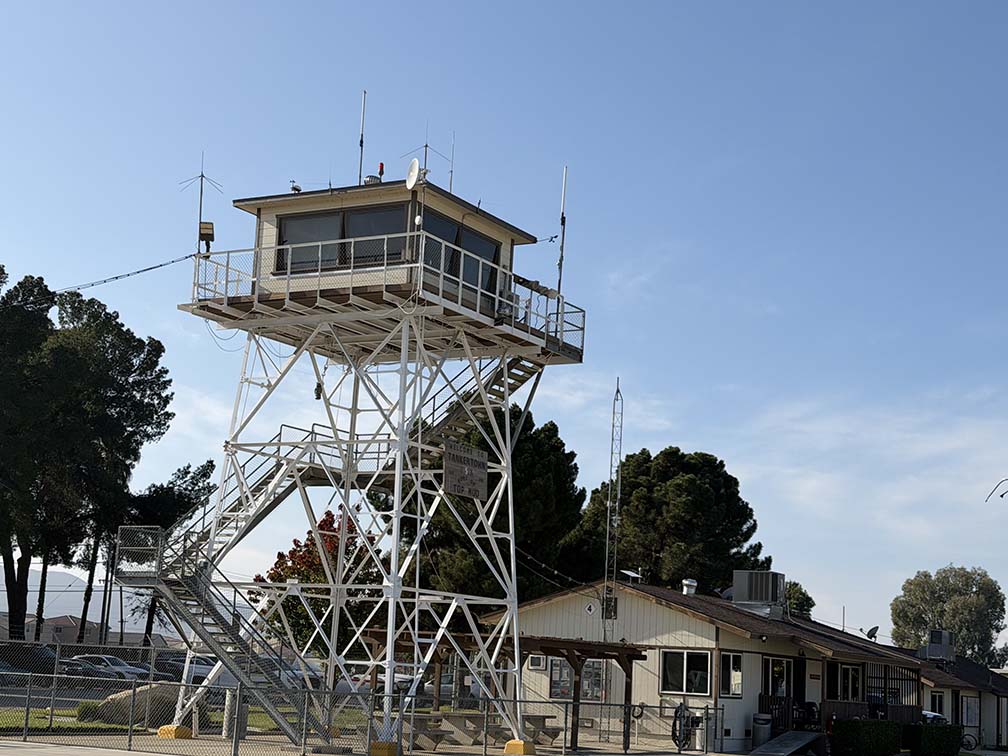
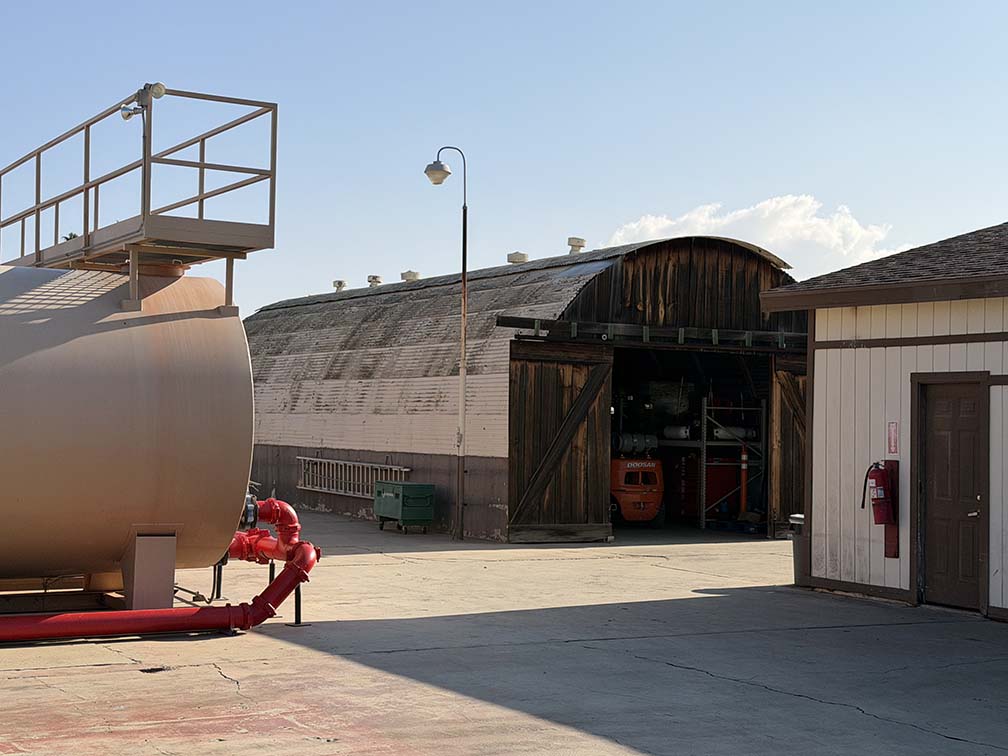
“This base has been around a long time,” Capt. Wagner said, gesturing toward a 1950s-era Quonset hut and a control tower that have seen generations of crews. “We’ve had full blueprints for a new facility drawn up twice in the last twenty years. Each time, by the time the plans were ready, we were already outgrowing them. We make it work, but we’re operating out of buildings from the ’50s and ’80s and a triple-wide that serves as our kitchen and day room.”
Some of those aged facilities, like the Quonset hut, were modeled in a Disney movie, according to Capt. Wagner. “Disney’s animators actually camped out here for a few months when they made Planes: Fire & Rescue,” Captain Wagner said. “The tower and our old Quonset hut are in the movie, and they modeled some of the characters’ faces and mannerisms from our captains. They even used our old helicopter number and recorded aircraft sounds right here.”
A quiet neighbor with a big impact
Most days of the year, Hemet-Ryan looks like any other small regional airport. Local pilots taxi out for practice flights, Civil Air Patrol cadets may attend weekly meetings, and mechanics service aircraft in low hangars along the field.
But when the humidity drops and the winds shift, the airfield’s purpose becomes clear. Sirens sound, engines roar to life and the red-and-white aircraft that call Hemet-Ryan home head out again over local hills and canyons, helping to protect local communities and beyond.
For residents who see those tankers and helicopters overhead on smoky afternoons, Hemet-Ryan Air Attack Base is more than a dot on the map. It is one of the region’s first and most powerful lines of defense—an experienced, battle-tested force in California’s ongoing fight against wildfire.