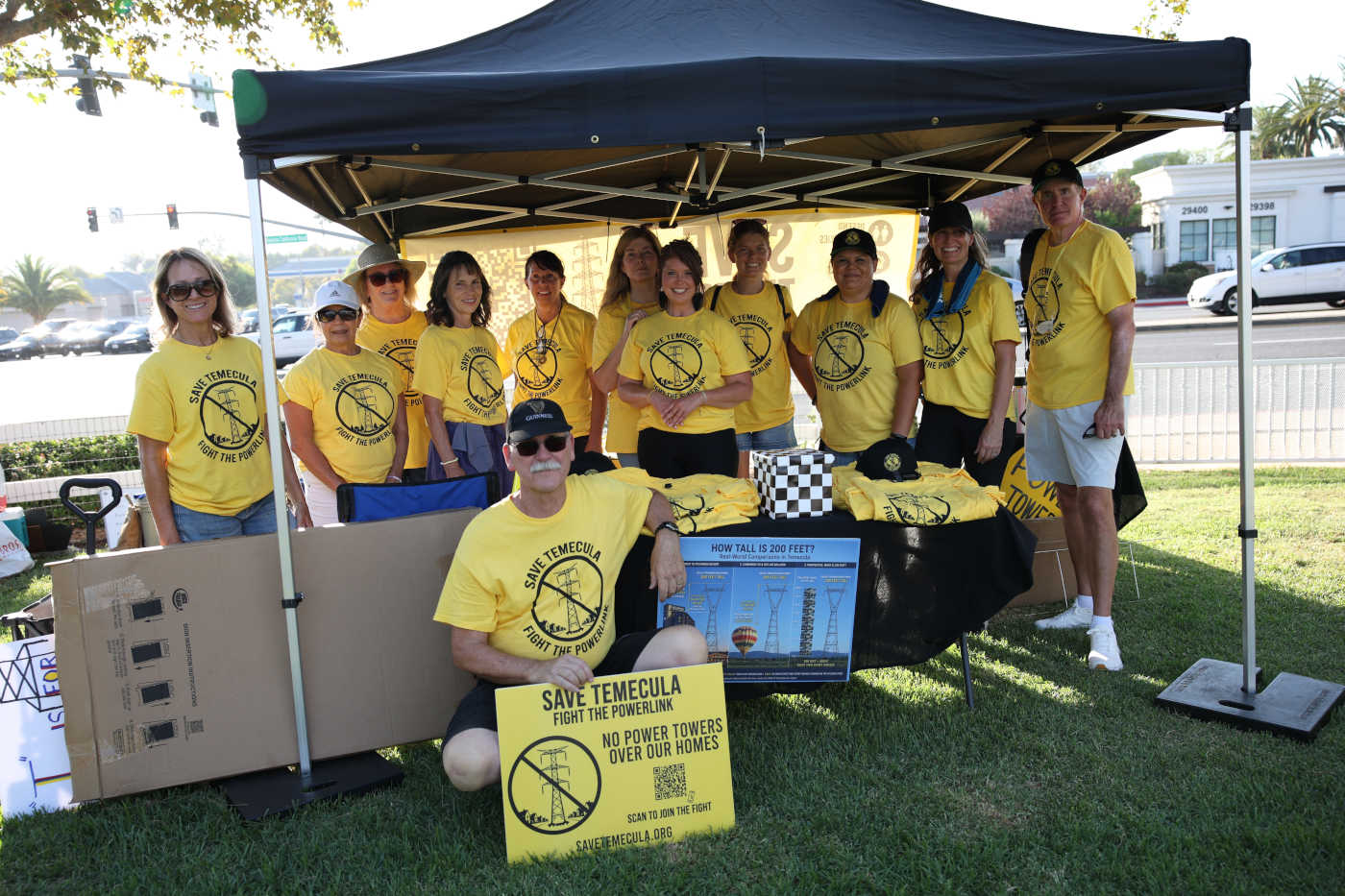
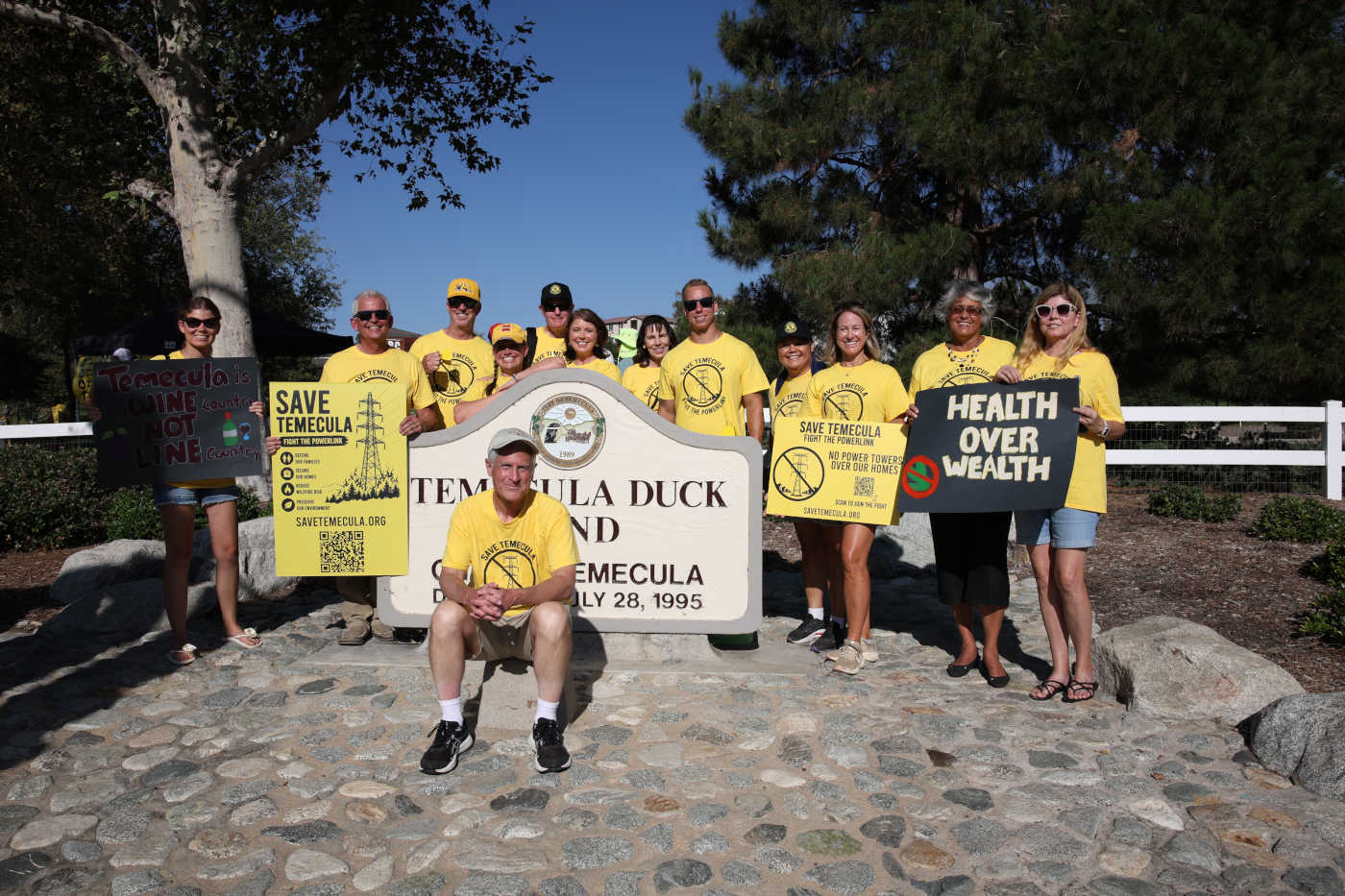


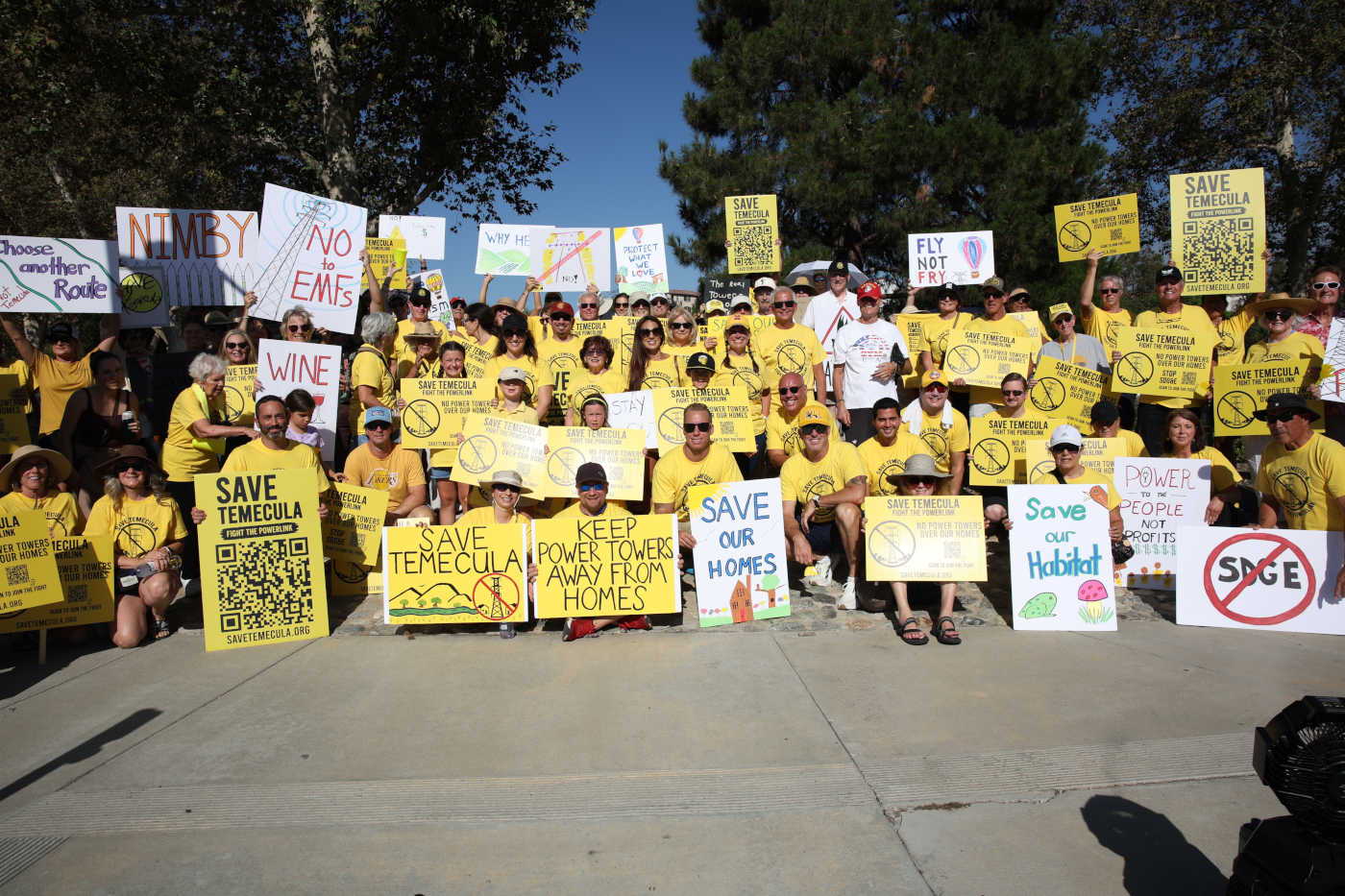
Over one hundred elected officials, business leaders, wine industry representatives and residents stood united last Saturday, August 1, at the Temecula Duck Pond in opposition to San Diego Gas & Electric’s proposed Golden Link Power Project, arguing that the current route threatens the Temecula Valley’s tourism economy, wine country, scenic character and public safety.
The growing coalition includes the Temecula City Council, which has formally opposed the project as currently proposed, along with Visit Temecula Valley, the Temecula Valley Winegrowers Association and numerous community members who have voiced concerns during public meetings and rallies.
At the center of the opposition is SDG&E’s proposed 145-mile, 500-kilovolt overhead transmission line, which would pass through portions of Southwest Riverside County, including areas near state Route 79 South, Vail Lake, Galway Downs and the Temecula Parkway corridor near Temecula Creek.
Community leaders say the towering transmission structures would permanently alter one of Southern California’s premier tourism destinations while introducing additional wildfire concerns in an area already recognized as a high fire hazard.
SDG&E says, “California is entering a period of unprecedented growth in electricity demand as more aspects of daily life depend on electricity.” They say the project would “Support a stronger, more resilient electric grid that can deliver energy where it’s needed most,” and reduce transmission congestion that can contribute to higher costs and reduced reliability during extreme weather or emergencies.
SDG&E argues that it did not decide on its own to build the project. “The need for new transmission is identified through California’s independent statewide planning process, not by SDG&E.”
The company says the California Independent System Operator (CAISO) determined additional transmission capacity is needed to maintain reliability and support California’s clean-energy goals, while SDG&E’s role is to design, develop and operate the project if it is approved.
The Temecula Valley Winegrowers Association voiced their concerns, saying the project would jeopardize decades of investment that transformed the valley into one of California’s premier wine destinations.
“Temecula Valley Wine Country is not only an economic engine for our region, but also a protected agricultural destination that families, visitors, and businesses have invested decades into building,” said Mike Rennie, president of the Temecula Valley Winegrowers Association. “Placing massive transmission infrastructure through the heart of wine country threatens the rural character, scenic beauty, and long-term sustainability that make this region so special. We strongly urge SDG&E and state decision-makers to pursue alternative routes that protect our wineries, vineyards, residents, visitors, and wildlife from unnecessary environmental and wildfire risks.”
Opponents argue that the project provides little direct benefit to Temecula while placing significant environmental, economic and safety burdens on the community. According to Visit Temecula Valley and the Winegrowers Association, the transmission line is intended to move electricity across utility service territories rather than serve local customers.
The organizations are urging state regulators and SDG&E to consider alternative routes that avoid the Temecula Valley’s agricultural and tourism corridors.
The opposition reflects a rare level of unity among elected officials, the tourism industry, agricultural leaders and residents, all of whom say preserving Temecula’s scenic landscapes and internationally recognized wine country is critical to the region’s economy and quality of life.
The Golden Link Power Project remains under review by state regulators, who will ultimately determine whether the project moves forward and which route, if any, is approved.