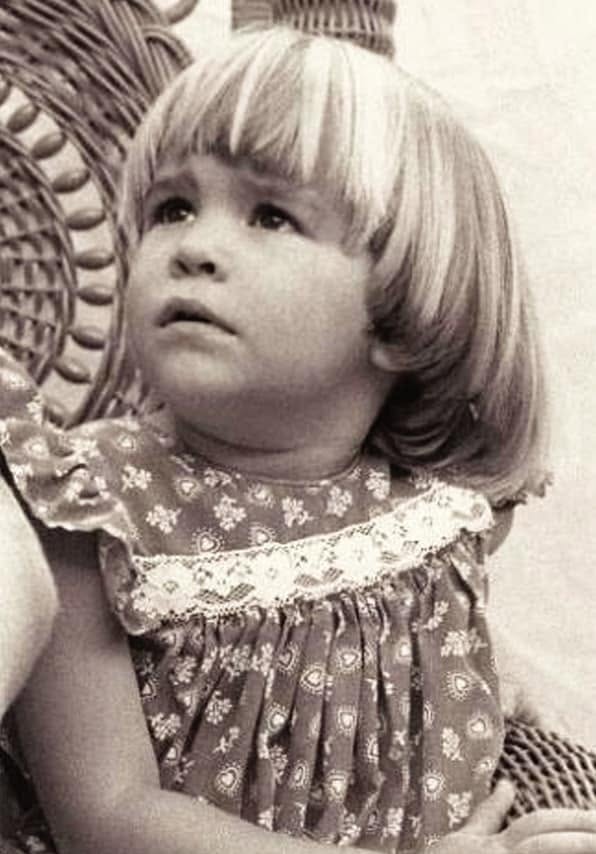
Third part in a series about the disappearance of three year old Laura Bradbury who disappeared in 1984 from Joshua Tree National Park and a woman who has come forward claiming she is the missing child. This series is a behind the scenes look at the work that needs to be done by a private investigator and a journalist to report the story. This installment is a look at three people surrounding the investigation who ended up being found dead in the desert. Two people were shot and one whose remains were found but the cause of death was undetermined.
More than four decades after 3-year-old Laura Ann Bradbury disappeared from Indian Cove campground in Joshua Tree on Oct. 18, 1984, questions remain not only about what happened to Laura, but about several people who became involved in trying to find her.
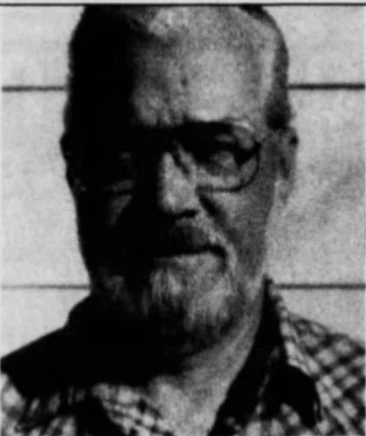
At least three people whose names became connected to leads in the Bradbury investigation subsequently disappeared. Two — Clifford “Bill” Leville and his girlfriend, Toby Ann Santangelo — were found shot to death in the desert. A third, Jim Nestor, disappeared after independently searching an area where he believed Laura might have been held.
There has never been established evidence that their deaths or disappearances were caused by their involvement in the Bradbury case. San Bernardino County sheriff’s investigators specifically disputed such a connection.
But the circumstances were disturbing enough that Laura’s father, Mike Bradbury, publicly questioned whether they were related to his daughter’s disappearance.
According to a detailed July 20, 1986, Los Angeles Times Magazine account of the Bradbury investigation, Leville, 41, and Santangelo, 22, went to the San Bernardino County Sheriff’s Department on Feb. 21, 1985.
They told Capt. Gene Bowlin they believed they knew who had taken Laura.
According to the Times account, the couple identified a man they said resembled the composite drawing of a person investigators were interested in locating. They said his appearance had changed — including his facial hair, weight and eyewear.
More significantly, they reported having been at the man’s house when another man made a disturbing remark during an argument that referred to taking little girls in vans.
Sheriff’s investigators ultimately concluded that the man identified by Leville and Santangelo did not fit the evidence in Laura’s disappearance. Among other discrepancies, investigators said he had worn contact lenses for years and could not grow the type of beard depicted in the composite.
But before all of that was resolved, Leville and Santangelo disappeared.
Friends reported them missing April 9, 1985. According to the Times, the couple appeared to have left abruptly. The lights were on, the furnace was running, the stereo was playing and Leville’s dog — which friends said he rarely left behind — remained at the house.
Then came a grim discovery.
On July 12, a Marine stationed at Twentynine Palms and his visiting brother discovered a human arm bone in the hills above Sunfair Dry Lake.
Searchers subsequently found Leville’s body in a ravine. He had been covered with dirt and had suffered multiple gunshot wounds to the head.
Two weeks later, searchers found Santangelo nearby.
She was wrapped in a blanket, buried in a shallow grave and had been shot twice behind the right ear.
The killings were never officially established as being connected to Laura’s disappearance.
In fact, years later, sheriff’s officials continued to reject such a connection. In 2010, retired sheriff’s Capt. Dean Knadler told the Los Angeles Times that investigators had checked the couple’s information and did not consider it credible. He said Laura’s disappearance had nothing to do with their killings.
Mike Bradbury remained unconvinced, according to public reports.
Conflicting accounts about what the couple told authorities
There is another unusual aspect to the historical record.
The 1986 Los Angeles Times account states specifically that Leville and Santangelo went to the sheriff’s station on Feb. 21, 1985, and told Bowlin they knew who had taken Laura.
But in December 1988, Sheriff’s Lt. Michael Stodelle gave the Times a substantially different account.
“There was street talk” that Leville and Santangelo had information concerning Laura, Stodelle said, adding that, as far as he knew, the couple never officially came to authorities.
The two published accounts are difficult to reconcile.
The earlier Times story describes the couple appearing at the sheriff’s station, identifies the date and the captain they reportedly spoke with, and describes what they allegedly told him.
The later sheriff’s statement says they never officially came forward.
More than 40 years later, determining what is contained in the original sheriff’s reports could help resolve that discrepancy.
Then there was Jim Nestor. He went looking for Laura.
Nestor, 57, lived in Johnson Valley northwest of Joshua Tree and had been conducting what the Times described as an informal campaign against drug dealers in the area.
His involvement in Laura’s case reportedly began in early 1985 after a psychic said she believed Laura was being held in the mountains near Johnson Valley.
Unlike someone merely passing along a psychic prediction, Nestor went looking.
According to Nestor’s sister, Grace Downer, Nestor traveled to the area described in the tip and found an old aluminum trailer with a yellow stripe. Around it, he reportedly discovered disposable diapers and a child’s pink sleeper.
He went back.
According to Downer, an angry man carrying a rifle drove him away.
Nestor returned again.
This time, according to the account, he encountered about six armed men and kept driving.
Nestor later flew over the area in an airplane.
Shots were reportedly fired at the aircraft.
Then, according to Downer, a telephone call came to her home warning Nestor to stay out of the air or he would be hurt.
Whether any of what Nestor encountered had anything whatsoever to do with Laura is unknown.
But on Oct. 22, 1985, Nestor left his sister’s Johnson Valley home to walk to a nearby friend’s house for coffee.
He never arrived.
He disappeared.
The 1986 Times report said Downer rejected an early suggestion that her brother might have gone into the desert and killed himself. At the time that story was published, no trace of him had been found.
Later accounts report that a skull discovered in a remote canyon near Ruby Mountain in February 1988 was identified as Nestor’s. His cause of death was not determined.
That distinction is important: unlike Leville and Santangelo, the available records reviewed for this story do not establish that Nestor was shot to death.
A connection — or coincidence?
The deaths created an understandable suspicion for Mike Bradbury.
The Times reported that Bradbury wanted a grand jury investigation that would include his daughter’s disappearance and the cases involving Nestor and Santangelo.
Sheriff’s investigators strongly disagreed with Bradbury’s conclusions.
Knadler told the Times that Bradbury was drawing connections investigators could not substantiate. Regarding Nestor, retired Capt. Bowlin said Nestor’s family had not initially connected his disappearance to Laura and that the connection emerged later after conversations with Bradbury.
The sheriff’s department also said it investigated the person Leville and Santangelo had identified and found nothing tying that individual to Laura’s disappearance.
Those facts matter.
So do the facts surrounding the victims.
Leville and Santangelo apparently believed they had information about Laura’s disappearance. They disappeared weeks later and were eventually discovered in the desert, both shot in the head.
Nestor independently followed a purported Laura lead into an isolated desert location, reportedly encountered armed men, was allegedly shot at while flying over the area and received a threat. Months later, he disappeared.
None of that proves the events were connected.
But neither should the documented history be reduced to rumor.
The deaths, disappearances and contradictory accounts are part of the historical record surrounding one of Southern California’s most enduring missing-child mysteries.
As this series continues, Valley News will distinguish between what can be documented, what witnesses have alleged and what remains unproven.
Forty-two years later, that distinction may be more important than ever.
Sources: Contemporary and subsequent reporting by the Los Angeles Times, including Paul Ciotti’s 1986 investigation of the Bradbury case and later Times reporting concerning Leville, Santangelo and the continuing investigation.