Soboba Band of Luiseño Indians
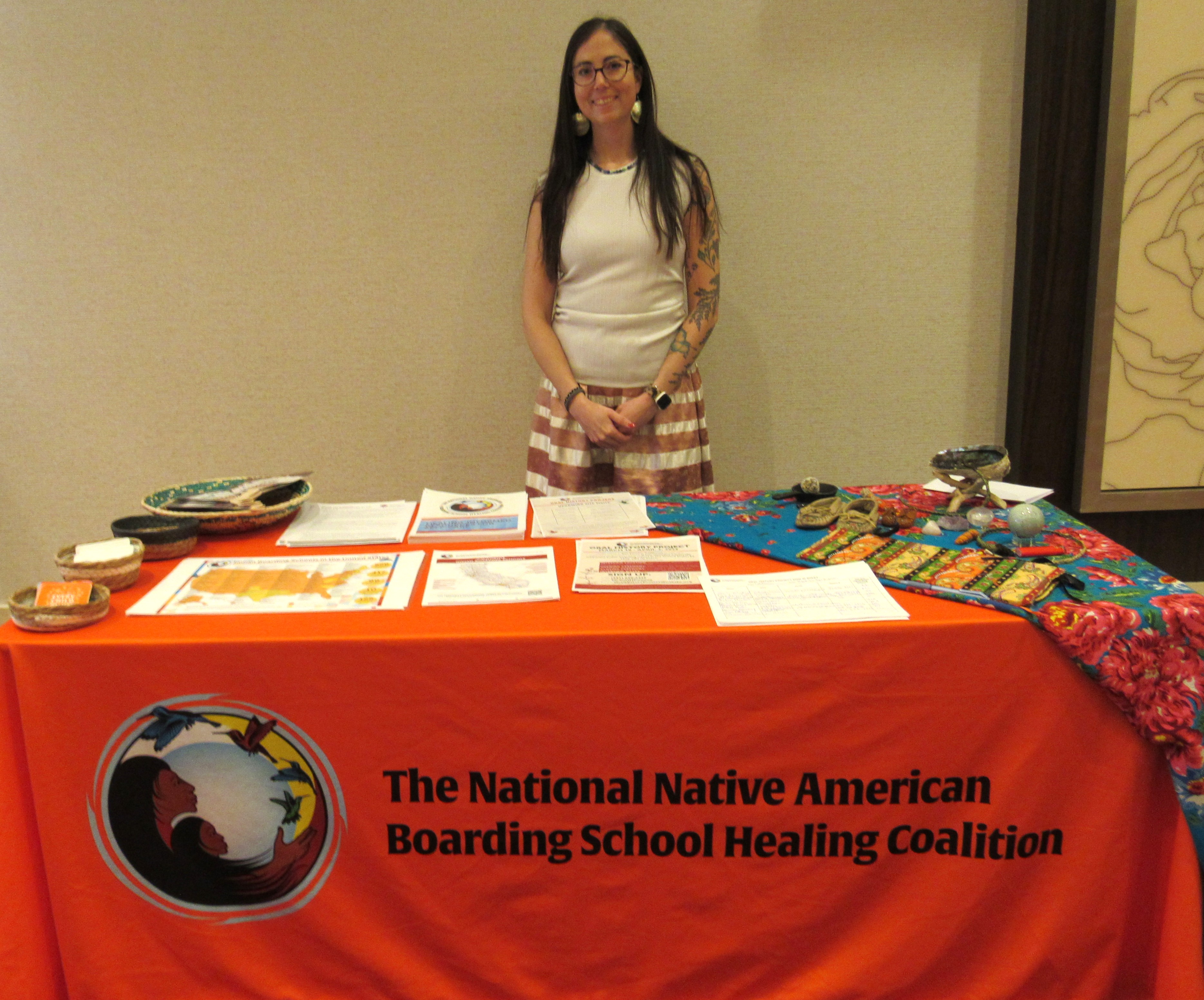
The National Native American Boarding School Healing Coalition (NABS) is traveling around the country to gather boarding school survivors’ stories. This historic project aims to create a permanent oral history collection that will be housed in the Library of Congress.
Survivors have been given the opportunity to share their experiences to help others understand the true history of the boarding school experience. Through a cooperative agreement with the Department of the Interior, this unprecedented effort is a crucial part of the DOI’s Federal Indian Boarding School Initiative.
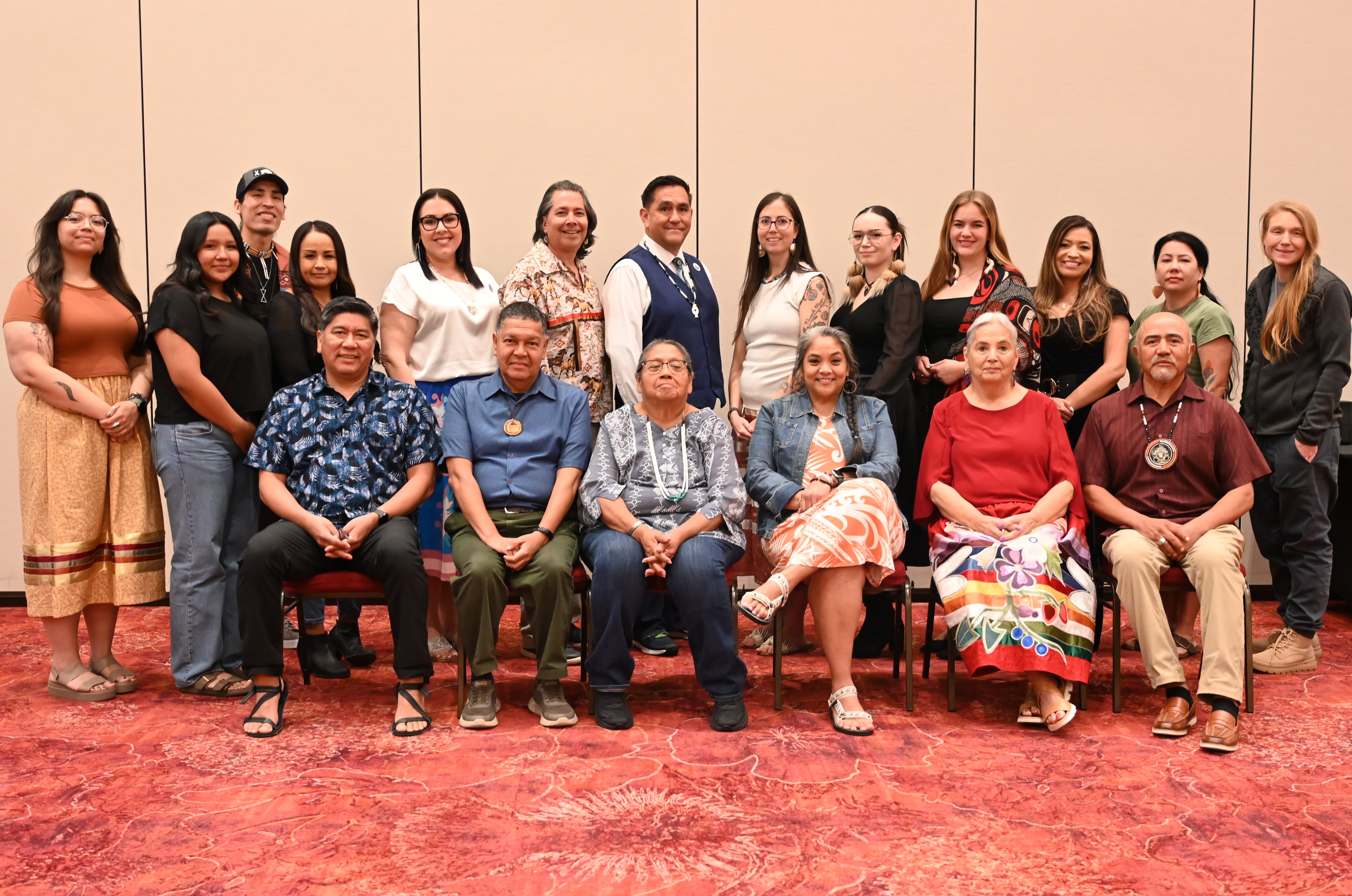
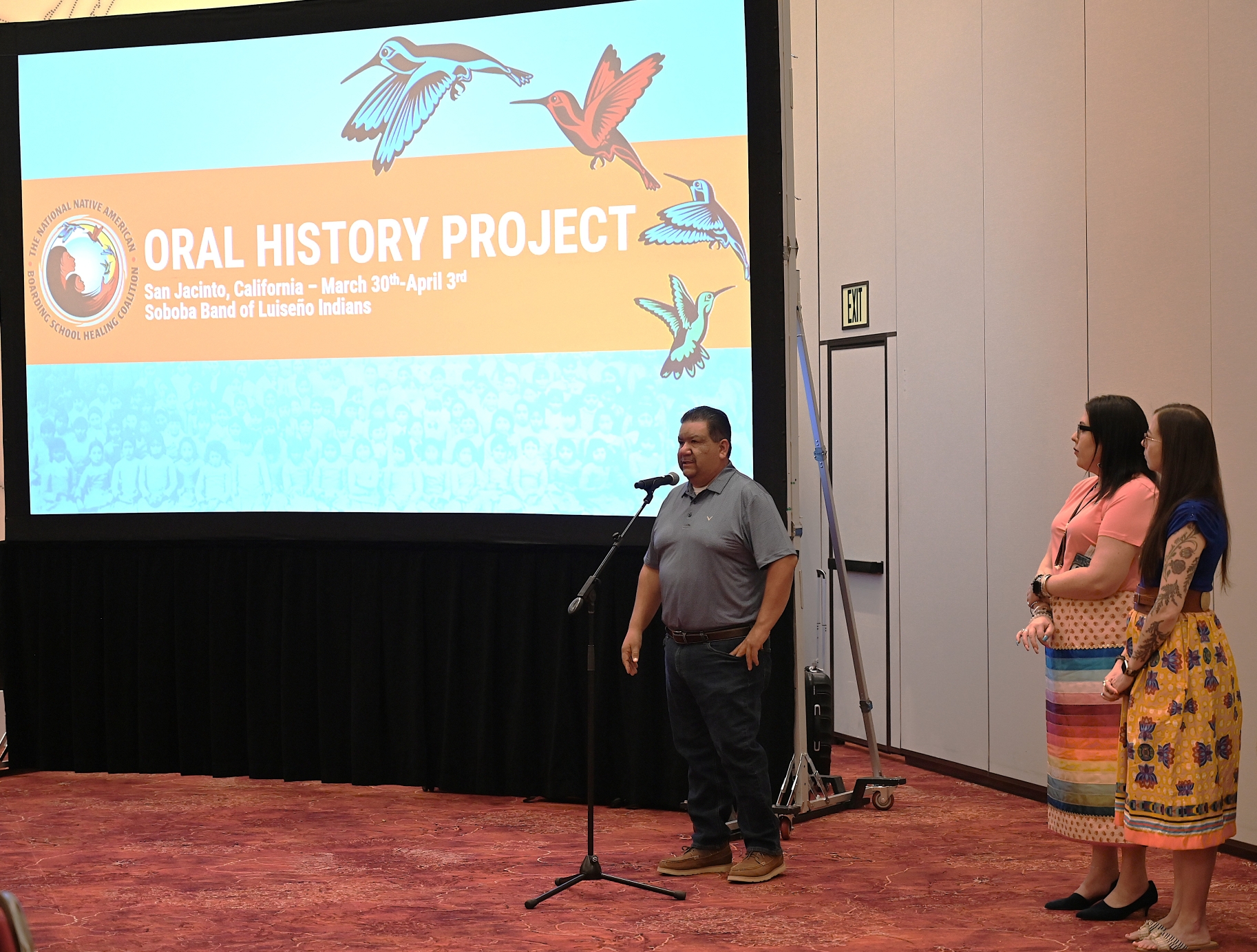
From March 30-April 3, Oral History Project Co-Directors Charlee Brissette (Sault Ste. Marie Ojibwe) and Lacey Kinnart (Sault Ste. Marie Ojibwe) were part of a 15-member team at the Soboba Casino Resort Event Center. There were also three oral historians, three mental health supporters, three supporters, three videographers, and one portrait photographer.
As Co-Directors of the Oral History Project, Kinnart and Brissette lead the strategic direction, implementation, and oversight of a national initiative to document the histories of Indian boarding school survivors. They manage monthly, week-long site visits across the country, each including an Opening Ceremony, an average of 24 survivor interviews, and a Closing Ceremony.
Their responsibilities include national outreach and partnership development, coordination with Tribal Nations and federal partners, staff, and logistics management, and ensuring all work is conducted in a culturally grounded, healing-informed, and survivor-centered manner. They also oversee interview protocols, consent processes, and post-production efforts, including transcript review, video editing, and archival preparation for permanent collections.
“All interviews we received were a gift – Indian boarding school survivors and alumni do not owe their stories to anyone; however, our Oral History Project team provides a safe and sacred space to share their stories,” Brissette said. “We hear from relatives who have dealt with extreme trauma, and we hear stories of profound resilience and hope. We know and honor that ALL stories deserve to be heard. All our elders have stories to share.”
Soboba Housing Specialist Dondi Silvas attended as a board member of the Soboba Foundation since they sponsored food for the week-long event. She believes it is always important to hear both sides of the story and what better way to do it than to interview actual Native Americans who lived it. She said the Coalition did a great job with their process of bringing healing to those who shared. She added that it was a great honor and a privilege to host this healing event at Soboba.
“There were counselors on hand to debrief, crafts, a quiet room and finished up with a glamor photo shoot for the participants to cherish,” Silvas said. “They took what might have been a tragic situation and gave them hope for healing. Seeing pictures on a slideshow and hearing actual stories through the eyes of those that attended these boarding schools was very heartfelt. I pray these families can start to heal.”
Silvas said her grandmother, Frances Grace Linton from the Morongo Band of Mission Indians attended the Sherman Institute in Riverside.
“Although she didn’t share many stories with us about her time there, she did tell us that her roommate was Sophie ‘Cuca’ Salazar of Soboba,” she said.
Mike Madrigal from the Cahuilla Band of Indians provided the opening and closing prayers for the week-long project. He thought it was nice that the opportunity was offered to those who wanted to share so they could process their experiences.
“Because of our Native ways, we know that gathering has a spiritual impact for everybody. It’s up to the Creator to give people insight into whether they were going to participate and find a healing journey,” he said. “It’s about both healing and celebrating positive experiences; they can share all sides.”
Soboba Tribal Council Vice Chairwoman Geneva Mojado said that although both of her parents attended boarding school at Sherman Indian School, her mother was too young to give testimony and her father did not want to participate.
“Both had good experiences though; they have built relationships with other Natives across the United States,” she said. “It’s important to tell the true history of what occurred at boarding schools. Sometimes sharing helps with the trauma. It’s time we tell our own stories and not let Hollywood or anyone for that matter, speak on our behalf.”
Mojado said the project representatives shared a map of all the boarding schools in California, and she was shocked by how many there were. NABS created a first-of-its-kind interactive digital map that shows all the Indian boarding schools in the United States as well as all the residential schools in Canada. This major project took many years and was in partnership with the National Centre for Truth and Reconciliation.
“The work they are doing is really leading the movement for truth, justice and healing!” she said. “THE NABS crew mentioned that Soboba was one of the best hosts; Soboba Casino Resort staff and the facility were top notch.”
Each team member at the Coalition is connected to Indian boarding schools. Charlee Brissette’s mother, uncles, and cousins attended the boarding school in Harbor Springs, Michigan, known as Holy Childhood of Jesus School. That school ran until it was finally closed in 1983. Charlee, who started working with NABS as an Oral Historian, was fortunate enough to interview her mother for the Oral History Project.
Lacey Kinnart’s grandmother, great aunts and uncles, and cousins attended Indian boarding schools, including Holy Childhood of Jesus School, Mt. Pleasant Industrial School, Flandreau Indian School, and Carlisle Industrial School.
The Oral History Project began site visits a little over two years ago – in March of 2024. The recording of oral histories is set to be completed at the end of June, at which point the team will transition to post-production to finalize and deliver all the interviews.
By its conclusion, NABS will have visited 22 sites across 19 states, with nearly 400 survivors sharing their stories. The time when all interviews will be made available to the public through the Library of Congress has yet to be determined.
The National Native American Boarding School Healing Coalition (NABS) was officially incorporated in 2012 and was created to address the impacts of the U.S. Indian boarding school system.
“Our Education and Research Department has a project creating Volume 2 curriculum for elementary, middle, and high schools,” Brissette said. “The high school curriculum that matches education standards for Michigan, Minnesota, New Mexico, Oregon, and Washington was recently released. Grade school and middle school are coming soon.”
The National Indian Boarding School Digital Archive (NIBSDA) is a large ongoing living being as the digital archive team continues to travel to archives across the U.S. to find and scan/digitize boarding school records, documents, photographs, and reports. More information on this project can be found at https://nibsda.elevator.umn.edu.
To learn more about the Oral History Project, please visit boardingschoolhealing.org/oral-history-project.